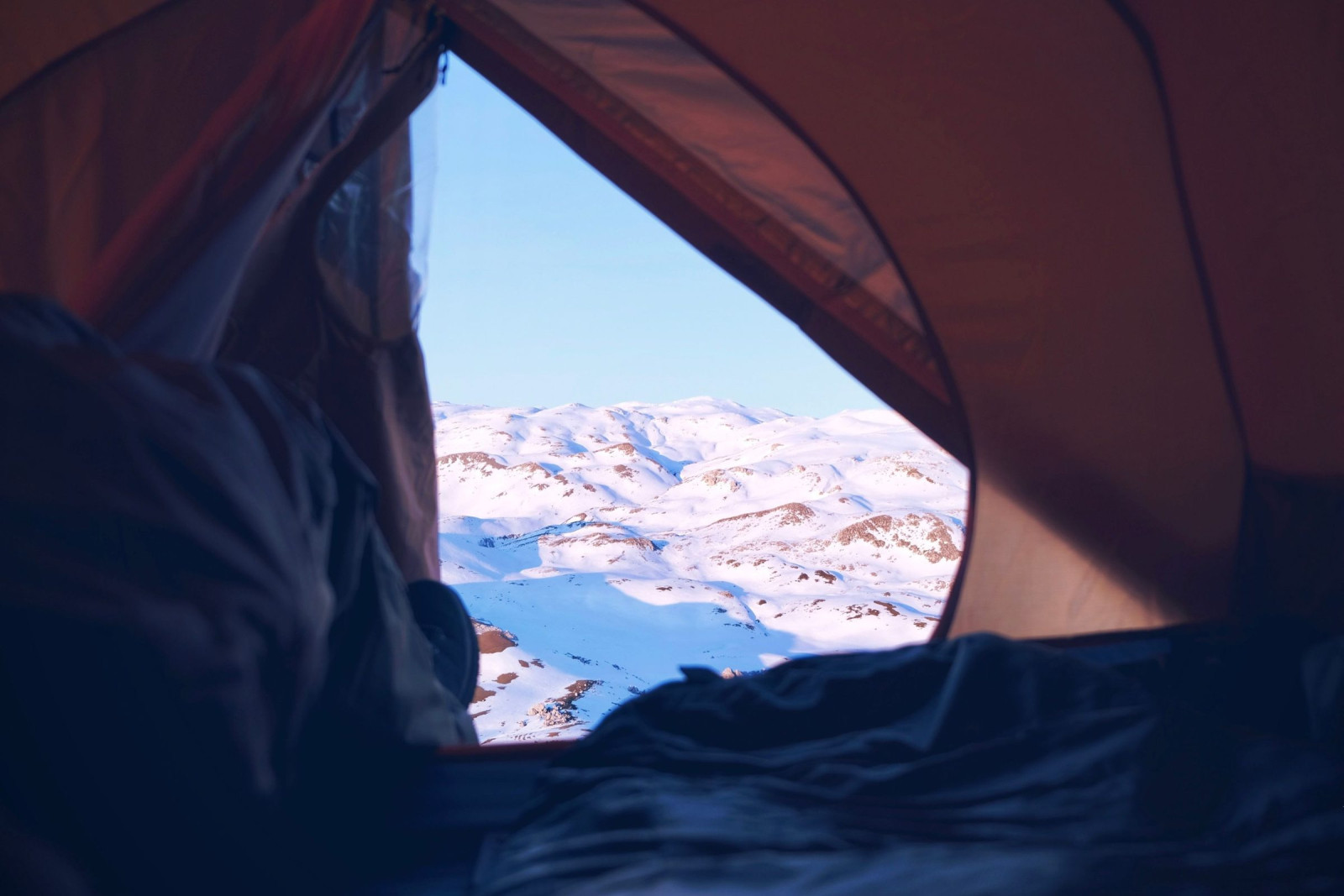
Every sleeping bag label carries two temperatures, and most people only read the bigger, colder one. On our Ayaz bag that is −9 °C, printed in bold on the stuff sack. It is a real number, measured in a lab, but it does not answer the question you actually have at the trailhead: will I sleep tonight?
Here is how we read the label ourselves, and the one rule we use when we pick a bag for a route.
What the two numbers measure
Bags sold in Europe are tested to the same standard (EN 13537, now ISO 23537). A heated mannequin lies in the bag on a mat, in a cold chamber, wearing a thin base layer. The lab records how cold the chamber can get before the mannequin loses heat faster than a sleeping person makes it.
- Comfort is the lowest temperature at which a standard adult woman, relaxed on her back, stays warm all night. Women and anyone who sleeps cold should plan with this one.
- Limit is the lowest temperature at which a standard adult man, curled up on his side, stays in thermal balance for eight hours. You will not freeze, but you will not sleep well either.
The gap between the two numbers is usually five to eight degrees. That gap is the part of the night you spend awake, pulling the hood tighter and wondering what time it is.
Our rule: plan with comfort, keep limit as the margin
Take the lowest temperature you expect on your route at night, then choose a bag whose comfort rating is at least one degree below it. Treat the limit rating as your safety margin for the night the forecast gets wrong. On a late-October weekend at Yedigöller we planned for −2 °C, took the Ayaz (comfort −3 °C) and woke up to −5 °C on the thermometer clipped to the tent. We slept fine, because we still had four degrees before the limit.
| Bag | Comfort | Limit | Weight | Nights we take it on |
|---|---|---|---|---|
| Çiy +5 | +9 °C | +5 °C | 690 g | Summer meadows, Lycian Way in May |
| Pınar 0 | +4 °C | −1 °C | 1,350 g | Spring and autumn forest camps |
| Ayaz −9 | −3 °C | −9 °C | 1,250 g | Kaçkar in September, first frosts |
| Buzul −18 | −11 °C | −18 °C | 1,980 g | Snow camps on Erciyes, January |
The comfort number tells you where you will sleep. The limit number tells you where you will lie awake.
Yayla shop floor, every October
The cold that comes from below
The lab test assumes a properly insulated mat. In the field, a bag rated −3 °C on a thin foam pad behaves like a bag rated +2 °C, because the down you lie on is crushed flat and holds almost no air. The ground takes heat from you all night, and no amount of loft on top of you can make up for it.
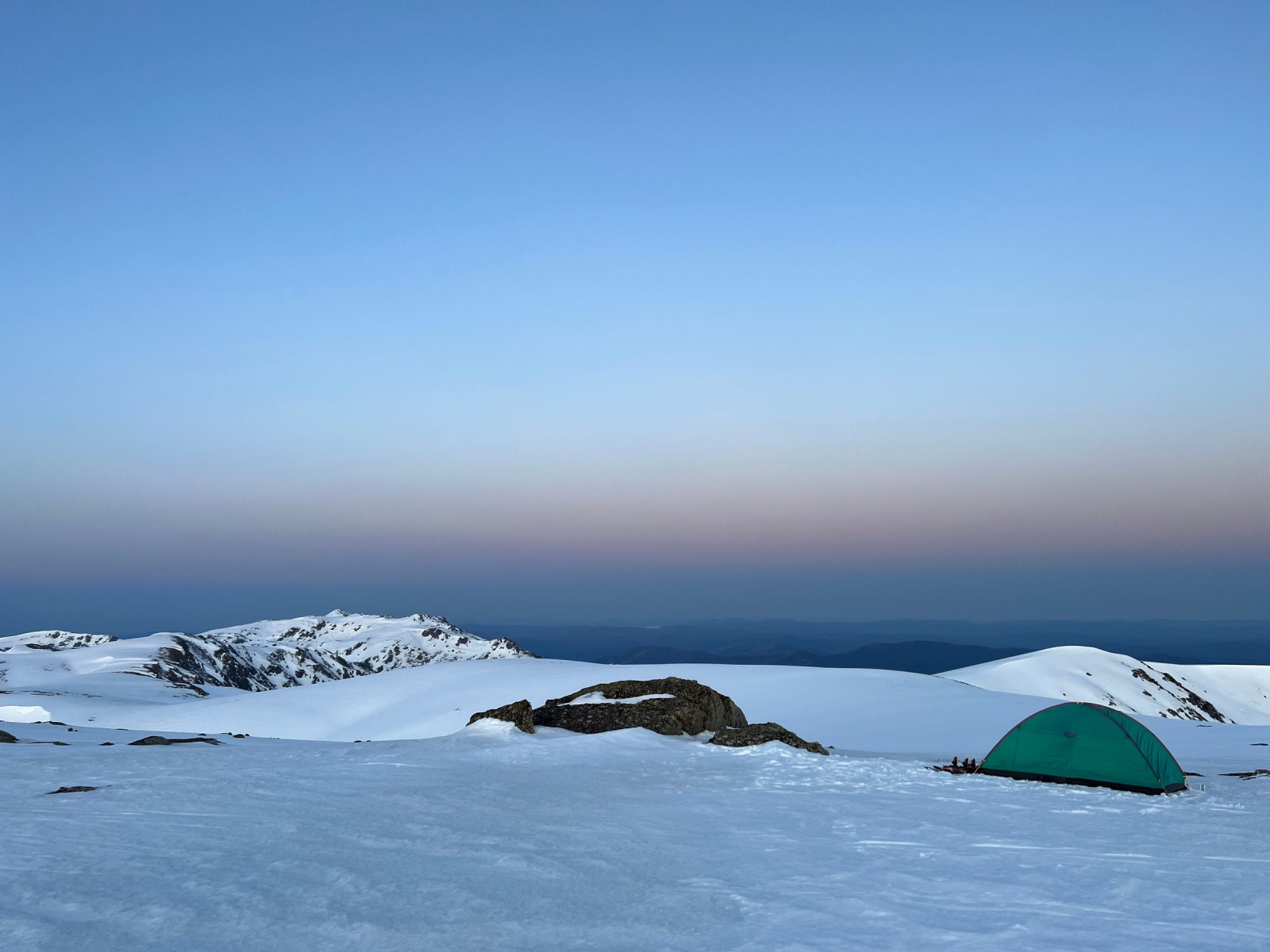
Mats are rated with an R-value: the higher the number, the better they stop heat leaving you. As a rough guide, R2 is for summer, R3 to R4 is fine down to about freezing, and anything below −5 °C wants R4.5 or more. Our Kuşluk mat is R4.2 at 480 g, which pairs well with the Ayaz. For snow camps we put a 10 mm closed-cell foam pad under it: R-values add up, and the foam also protects the inflatable from ice crystals.
Five things that move the number on the night
The label is measured in still air, with a well-fed mannequin that never gets damp. Real nights are messier. These are the things that shift your personal comfort temperature by a few degrees in either direction:
- Dinner. A hot meal with some fat in it, eaten an hour before bed, is worth about two degrees. Going to bed hungry costs the same.
- Dry clothes. Change out of the base layer you walked in. Damp merino against your back pulls heat for hours.
- Your down jacket. Wearing it inside the bag adds two or three degrees, as long as the bag is not so tight that it compresses the loft.
- Wind and humidity. A breezy, damp lakeshore at 0 °C feels colder than a dry, still ridge at −3 °C. Pitch with the door away from the wind.
- Fatigue and altitude. After a long day above 2,500 m your body makes less heat. Pick the warmer bag for the hardest night of the trip, not the average one.
Reading the night before you pack
Valley forecasts are not mountain forecasts. As a rule of thumb, air cools by about 6 °C for every 1,000 m you climb, and clear, windless nights in a hollow by a lake can drop a few degrees further as cold air settles. If the village below your camp expects +4 °C and you are sleeping 900 m higher, plan for −2 °C and pick your bag from that.
On the home page, drag the slider on the sleeping bag thermometer to the night's temperature: it applies exactly this rule and shows which bag keeps you on the comfortable side. And if you are between two bags, take the warmer one. You can always open a zip. You cannot add down at two in the morning.
2 comments
Slept at −4 °C on Erciyes in a bag rated −3 comfort and was fine with a down jacket on. Good rule of thumb.
Thanks Elif! The jacket inside the bag adds a couple of degrees, worth remembering.