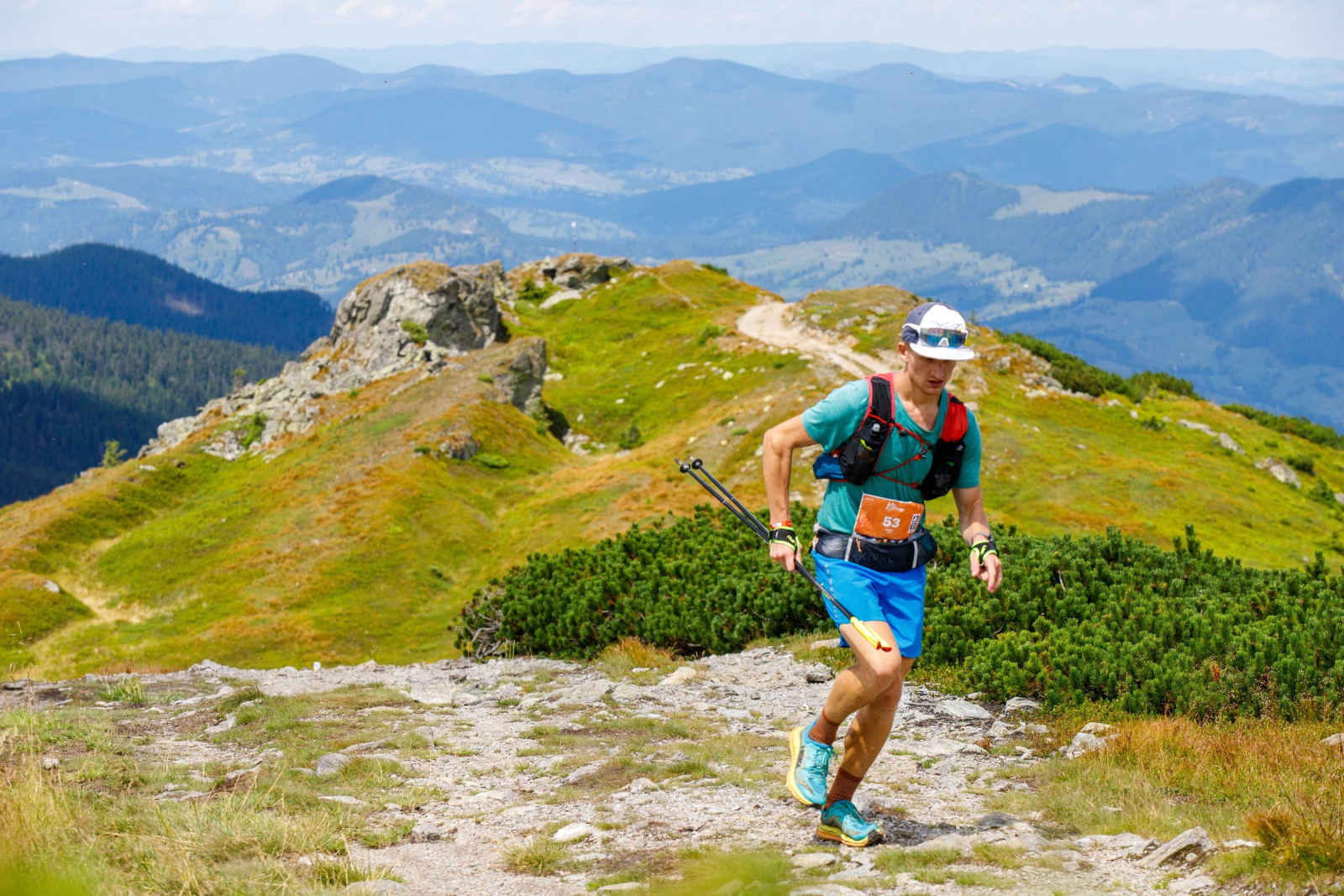
Thirty kilometres is the distance where trail running stops being a long run and starts being a day out. On a stretch of the Lycian Way above Faralya and Kabak, or the high pastures above Uzungöl, you will be moving for four to six hours, often far from a road and with no shop on the way. What you carry decides how the last ten kilometres feel.
A running vest holds between 5 and 12 litres and sits high and tight on the chest, so nothing bounces. That small volume is the point: it forces you to pack only what earns its place. Here is how we pack ours for a 30 km day with around 1,500 m of climbing.
Water: start with the map, not the flasks
Before you fill anything, mark every reliable water source on the route: village fountains, springs, a café that is open in the season you run. On the Lycian Way most villages have a public fountain; in the Kaçkar foothills streams run until late summer. Then plan to carry enough to reach the next source with a margin.
- Cool day, sources every 8–10 km: two 500 ml soft flasks in the front pockets.
- Hot day or one long dry stretch: add a 750 ml bottle in the back, or a 1.5 L bladder.
- Rough guide: 400 to 800 ml an hour, depending on heat and effort. Drink to thirst, but drink early.
Soft flasks in the front keep the weight close to your chest, where it moves with you. They also shrink as you drink, so the vest stays tight instead of sloshing.
Food: calories you will actually eat
Most runners can absorb about 200 to 300 kcal an hour on the move. On a five-hour day that is roughly 1,200 kcal, which you carry, plus whatever you buy in a village. We split it into small portions, one every 40 to 45 minutes, and set a quiet reminder on the watch. If you wait until you are hungry, you are already an hour late.
Mix sweet and salty. After three hours, gels taste like glue; a handful of salted almonds, a piece of pestil or a small cheese sandwich will be the best thing you have ever eaten.
The safety layer, even on a sunny day
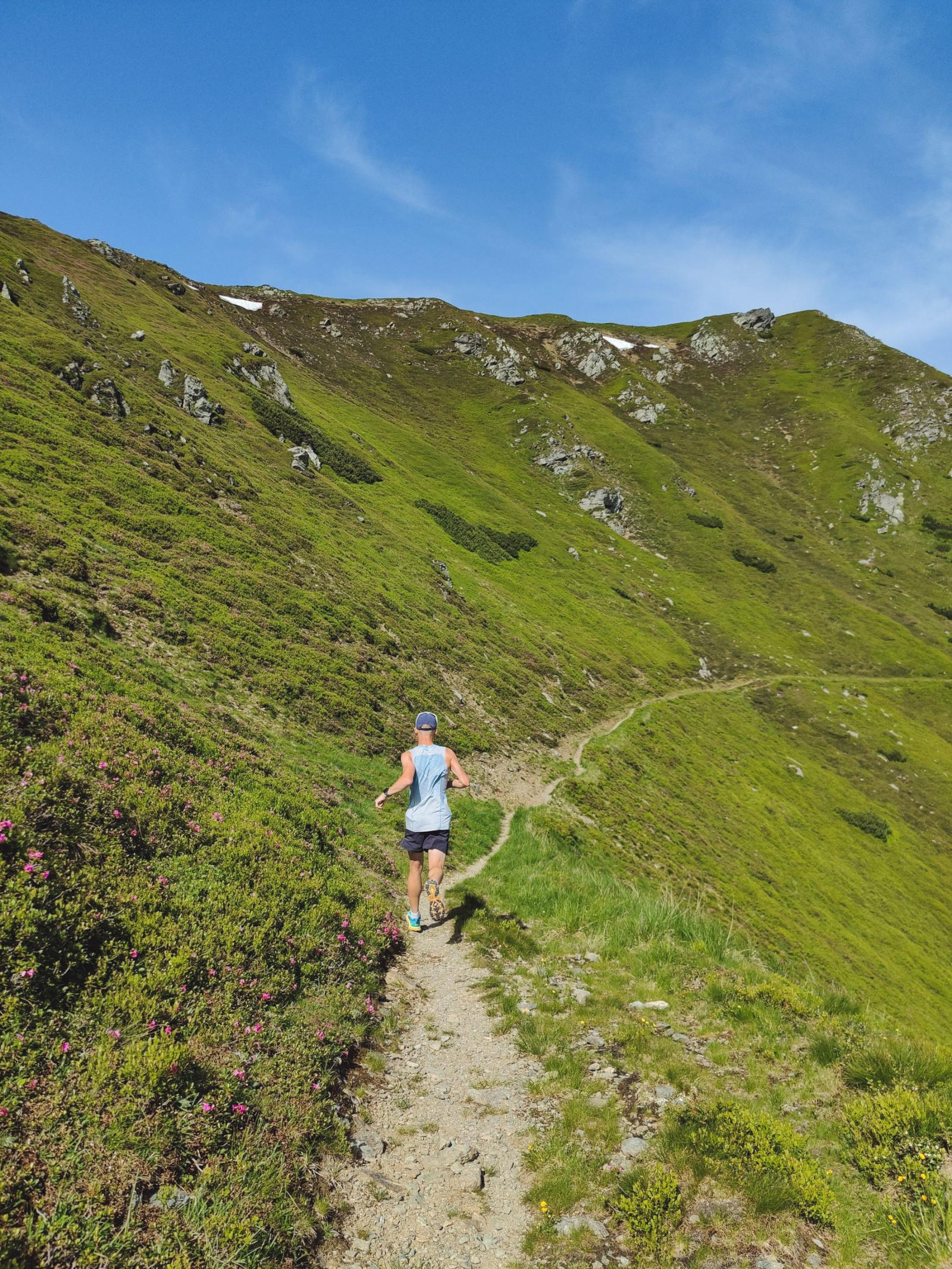
Mountain races require a short kit list for a reason. The weather changes, ankles turn, and a runner who stops moving in a T-shirt at 2,000 m gets cold within minutes. Our minimum kit lives in the vest permanently, so we never have to remember it:
| Item | Weight | Where in the vest |
|---|---|---|
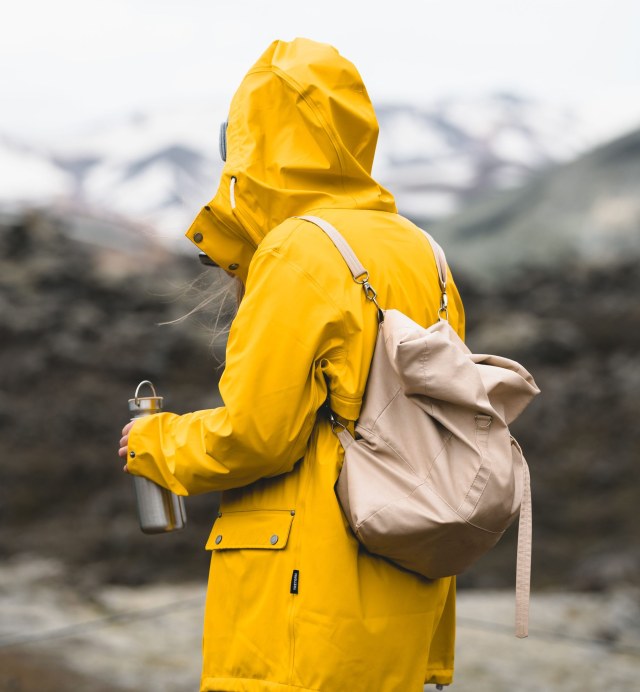
| Waterproof jacket with hood | 340 g | Back pocket, rolled |
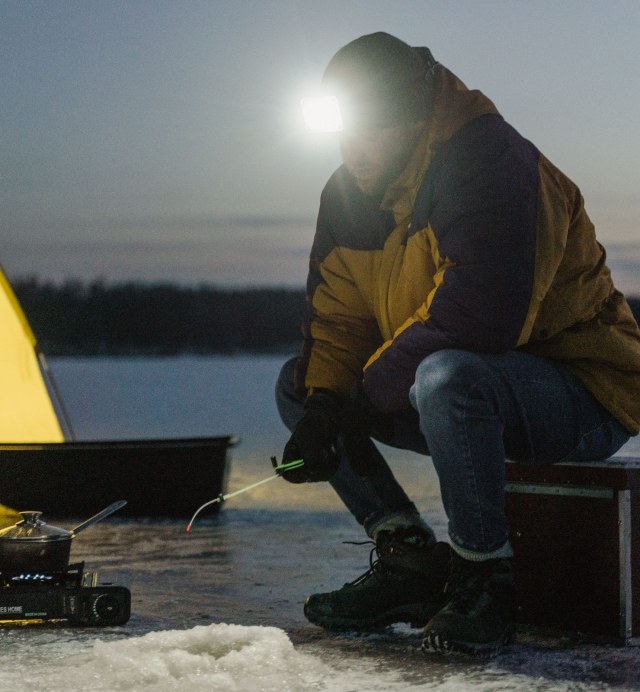
| Headlamp | 86 g | Small zip pocket |
| Emergency blanket | 60 g | Back, flat against the panel |
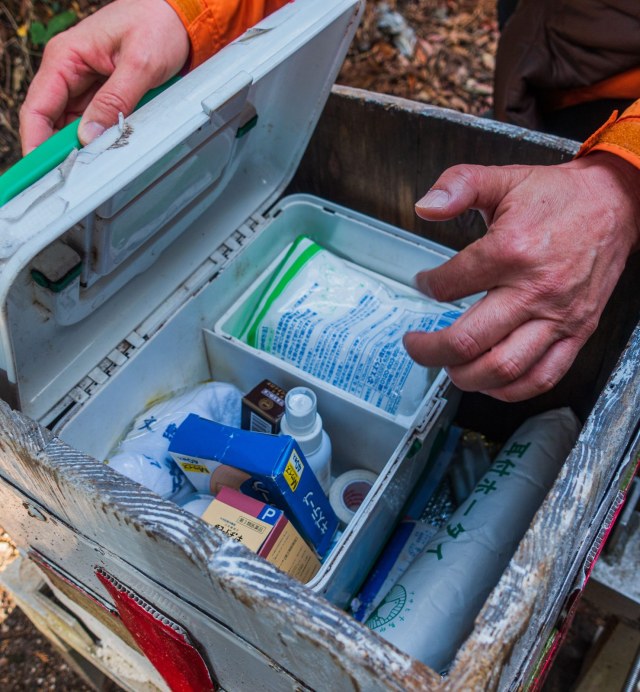
| Compact first-aid kit | 180 g | Back pocket |
| Phone, offline map loaded | 200 g | Chest pocket, zipped |
| Whistle | 8 g | On the sternum strap |
| Light gloves and a buff | 70 g | Side pocket |
| Total | 944 g |
You carry the jacket for the hour you do not plan for, not for the five hours you do.
Written on the inside of our kit-list card
Packing order and fit
Pack heavy and rarely used things in the back, close to your spine: the jacket, the first-aid kit, the blanket. Put everything you need on the move in the front: flasks, the next two portions of food, the phone. If you have to take the vest off to reach something, it is in the wrong pocket.
Then fit it full, not empty. Fill the flasks, pack everything, put it on and run 200 m. Tighten the side straps until it stops moving, and adjust the sternum straps so you can still take a full breath. A well-fitted vest with 2.5 kg in it disappears after the first kilometre. A loose one will chafe your collarbones by the tenth.
Before you leave the car
- Tell someone the route and the time you expect to finish.
- Check the forecast for the highest point, not the start.
- Phone charged, map downloaded, battery saver on.
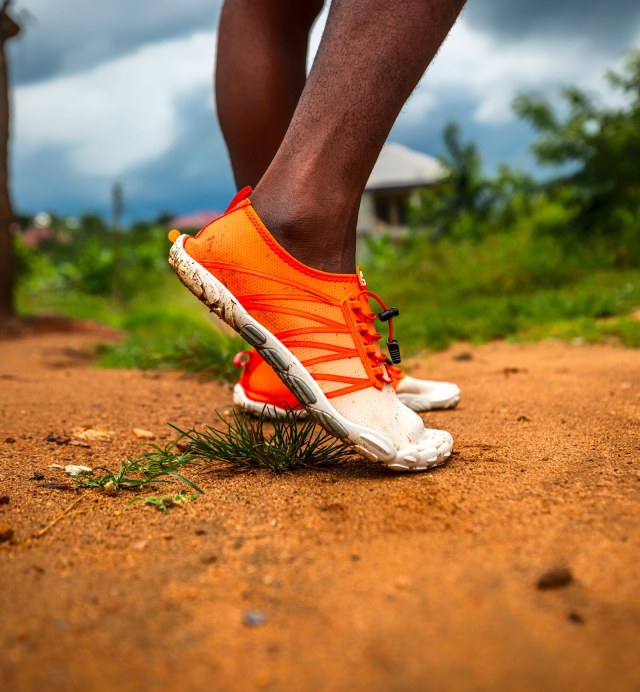
- Shoes laced for the descent: a bit firmer over the instep so your toes do not hit the front.
All in, with two full flasks and food for five hours, our vests weigh between 2.4 and 2.8 kg. That is light enough to run the climbs you can run and heavy enough to keep you safe on the ones that go wrong. Choose "Running" in the route pack on the home page and the kit above appears with its weights, ready to compare with what you already own.