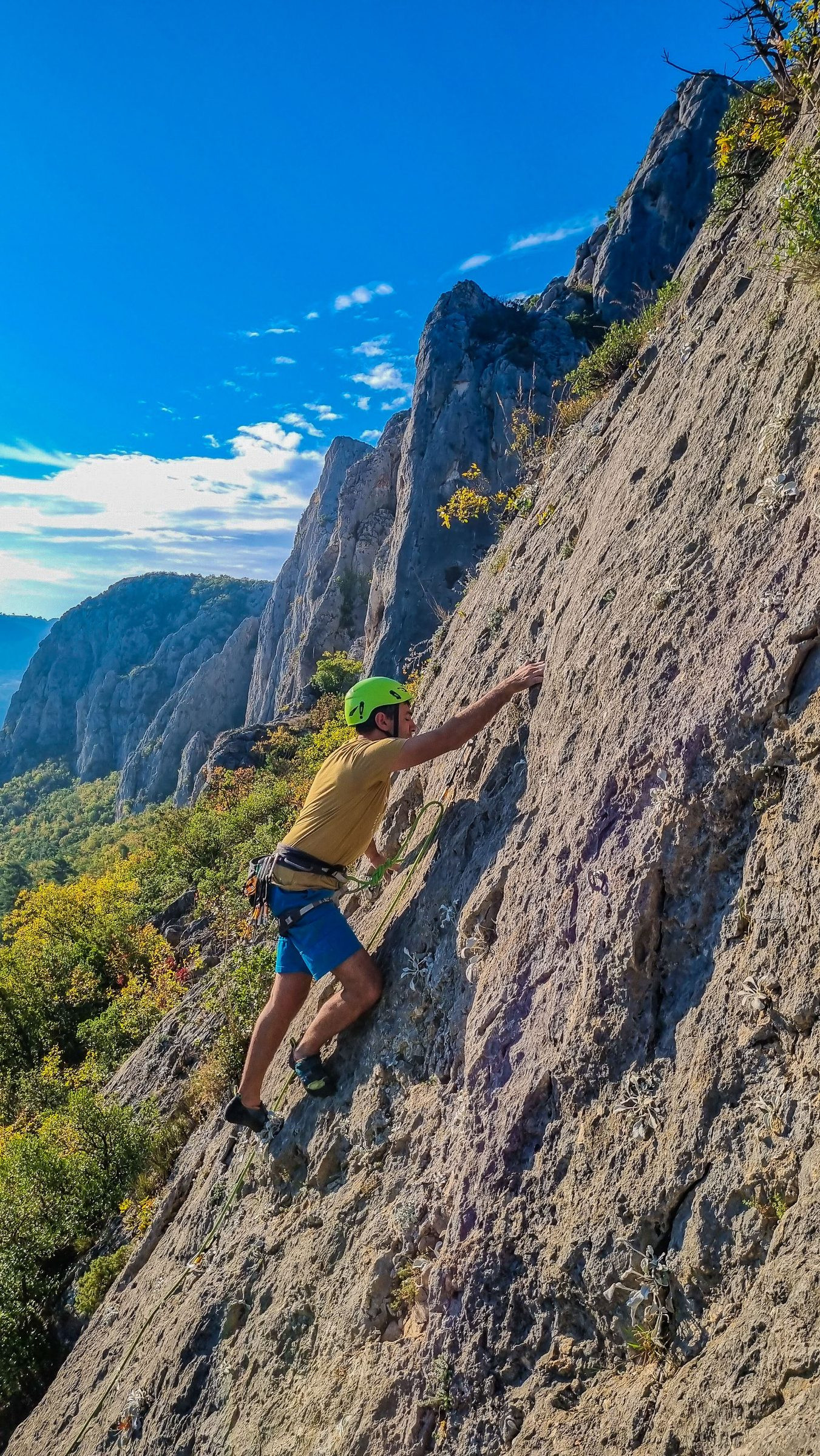
A multi-pitch route is a different game from the single-pitch crag. You climb one rope length, build or clip an anchor, bring your partner up, and do it again, sometimes six or eight times. You spend hours on the wall, you usually come down by abseil, and everything you need has to be on your harness or in a small pack. There is no walking back to the bag at the bottom.
Before our first long route in Aladağlar, a classic six-pitch line on limestone above the Emli valley, we wrote down everything we checked on the ground. This is that list, cleaned up after the climb with what we would change.
The night before: route and rope
Most problems on a multi-pitch start at the kitchen table, not on the rock. Read the topo together and agree on three things: how long each pitch is, where the anchors are, and how you get down.
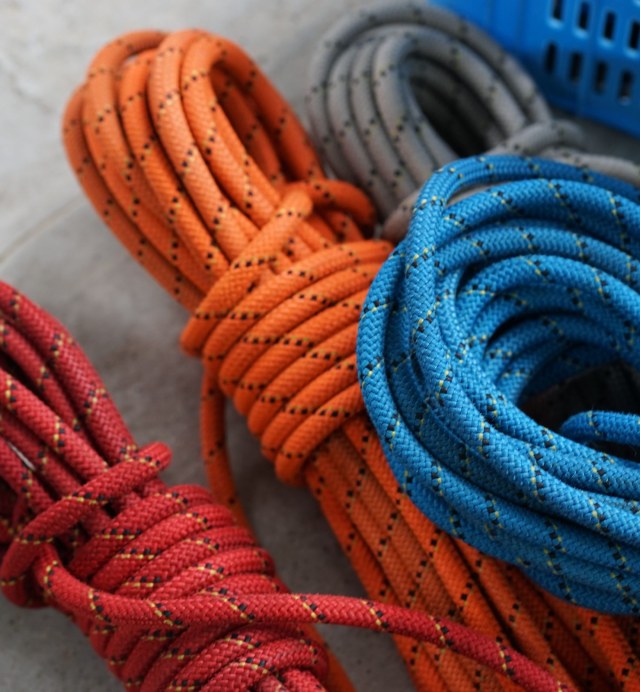
- Rope length against the longest pitch. A 60 m rope leads a 55 m pitch, but it only abseils 30 m. If the descent has 35 m stations, you need two ropes or a different way down.
- Descent line. Walk-off, abseil down the route, or a separate abseil line? Mark it on the topo and photograph the page.
- Turnaround time. Pick an hour at which you abseil from wherever you are. We chose 2 pm for a 7 am start; the light goes behind the ridge early in October.
- Weather. Afternoon storms build fast over the Taurus in summer. A forecast of "30 % chance of thunder after 3 pm" is a reason to start at first light, not a reason to go.
At the base: four questions, every pitch
Tie in and then ask each other these four questions out loud, every time, even on the sixth pitch when you are tired and the answer seems obvious. Especially then.
- Are both harness buckles closed and the waist belt above the hips?
- Is the figure-eight finished, dressed, through both tie-in points, with a tail of at least a hand's width?
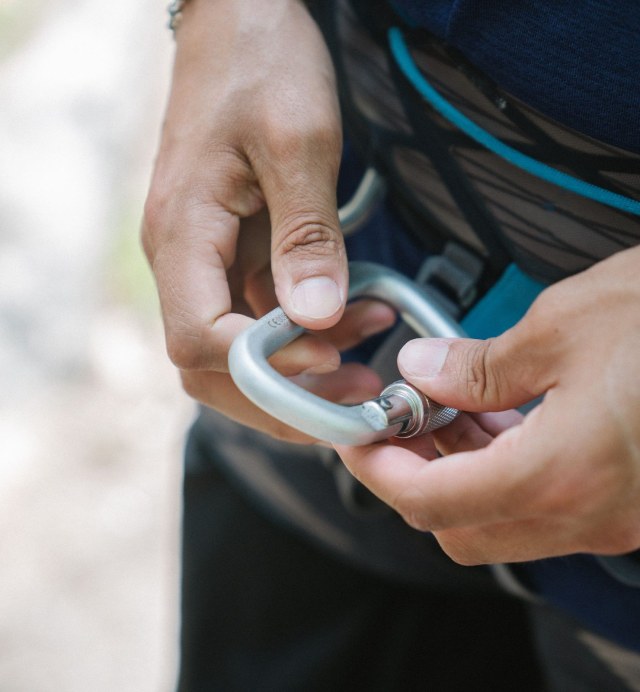
- Is the belay device threaded the right way, and is the locking carabiner locked?
- Is there a stopper knot in the free end of the rope?
The check that saves you is the one you do when it feels unnecessary.
Our instructor, at the base of pitch one
What goes on the harness
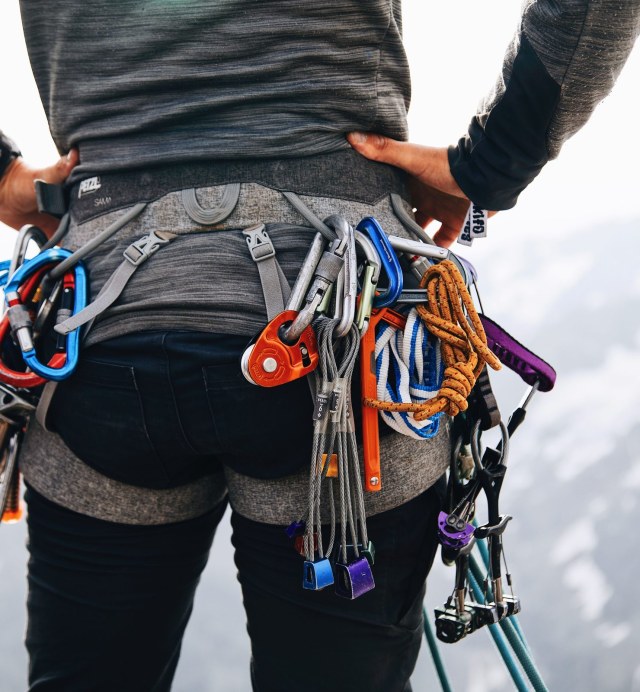
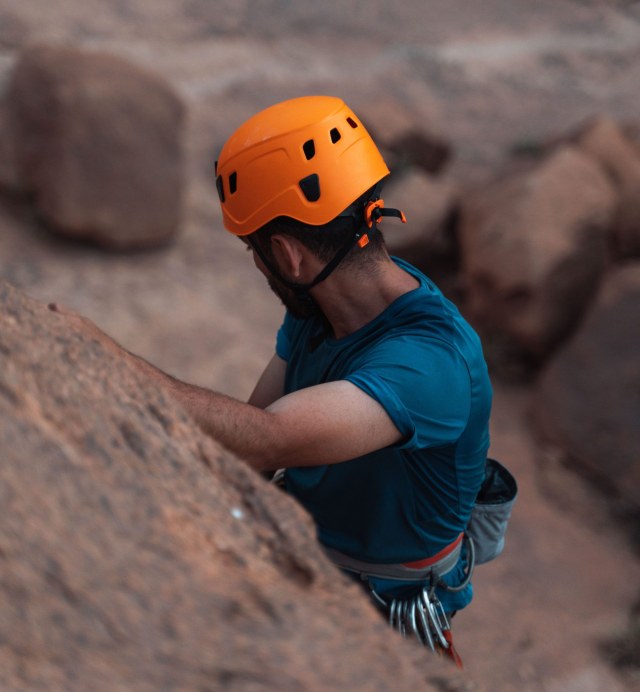
Rack the same way every time, so you can find things without looking. Leader on the left, belayer on the right, and nothing hanging below the knees where it catches on edges.
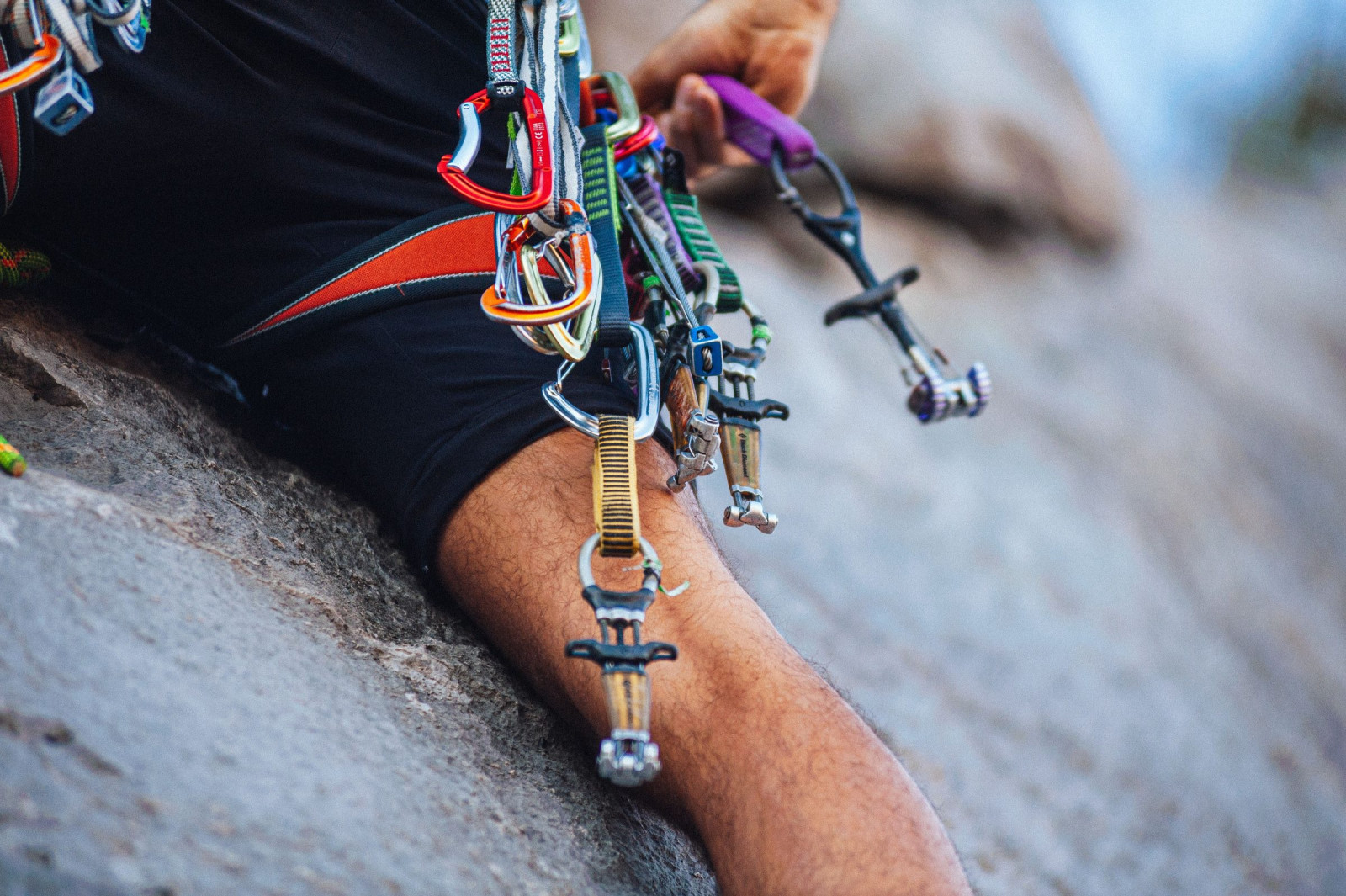
| Item | How many | Weight |
|---|---|---|
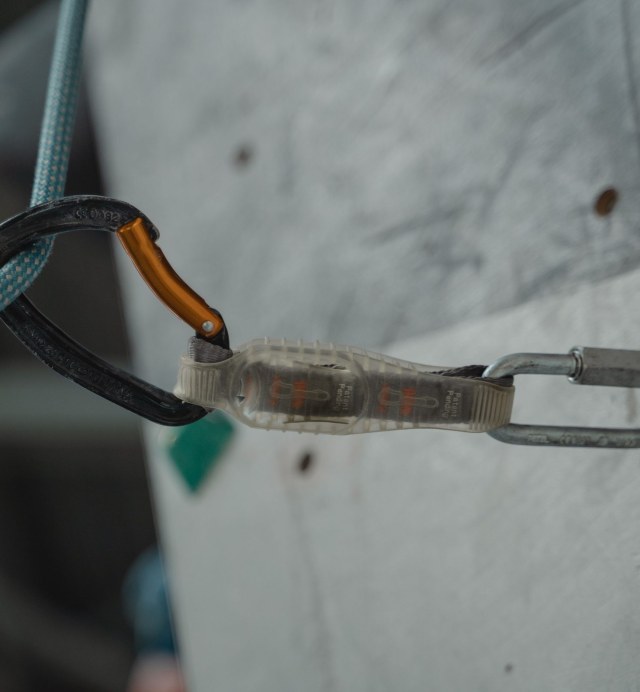
| Quickdraws | 12 (two sets of 6) | 1,080 g |
| Locking HMS carabiners | 4 each | 288 g |
| 120 cm sling | 2 each | 120 g |
| Belay device with guide mode | 1 each | 90 g |
| Prusik cord | 1 each | 30 g |
| Nut key | 1 per team | 25 g |
The guide-mode belay device matters more than it looks. From the anchor you belay the second directly, and if they fall the device locks on its own. Keep a hand on the brake strand anyway; the device simply makes long belays from a hanging stance far less tiring. The prusik is your backup on every abseil: tie it below the device, clip it to your leg loop, and you can stop mid-rope to free a snag or sort a tangle without sliding.
In the small pack
The second carries a 15 to 20 litre pack. Ours held a litre and a half of water each, food you can eat with one hand, a windproof shell each, a headlamp each (yes, even with a 2 pm turnaround), the first-aid kit, approach shoes for the walk down, and the phone with the topo saved offline. All of it came to just under 4 kg.
On the way down
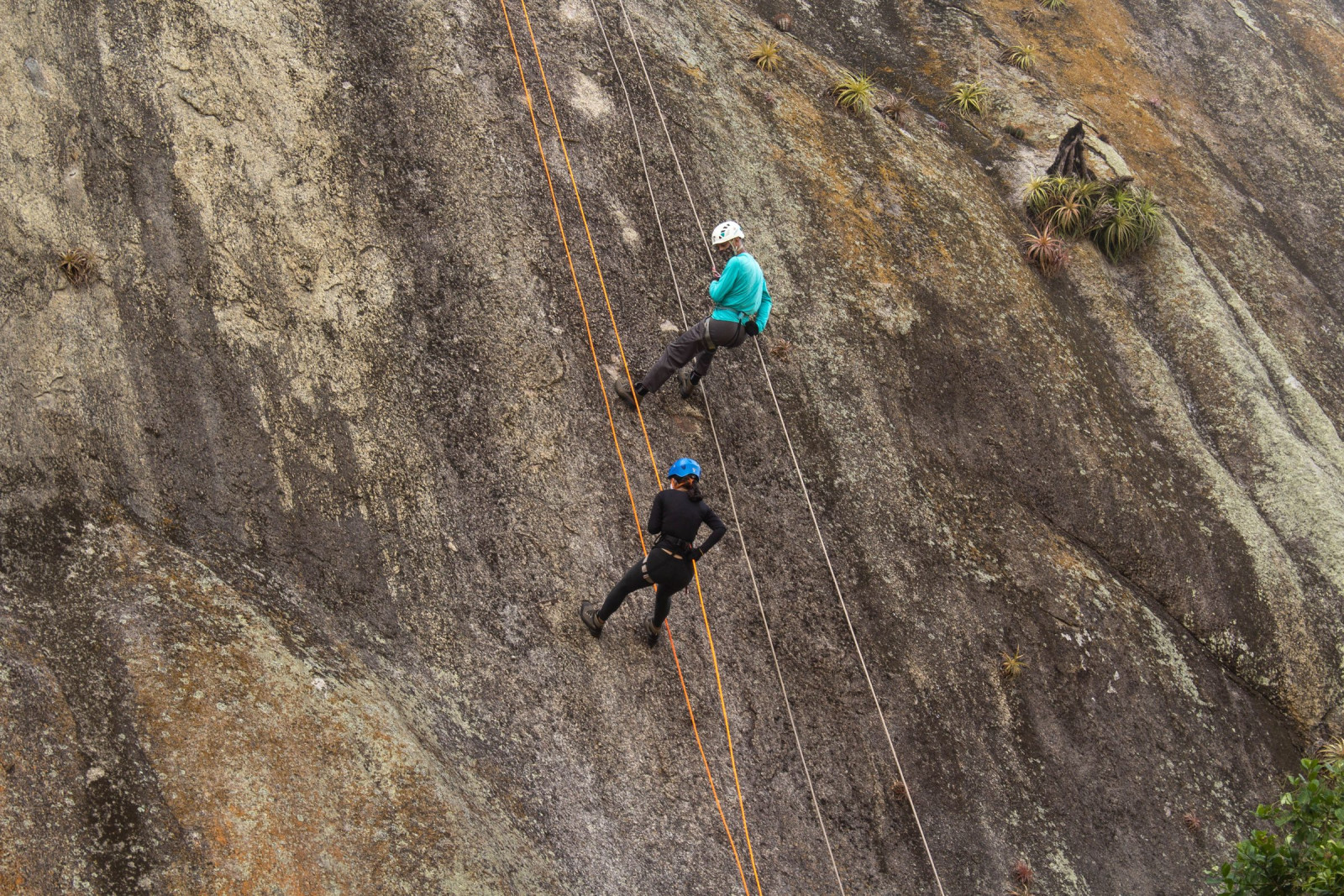
Statistically, abseiling is where things go wrong, because it comes at the end of the day when you are tired and thinking about dinner. Knot both ends of the rope, check the middle mark is at the anchor, set up the prusik, and have your partner look at your device before you unclip from the anchor. Then do it all again at the next station.
Choose "Climbing" in the route pack on the home page and the gear above shows up as a list with weights. And if this will be your first multi-pitch, go with someone trained, or take a guided day first. The list helps; the person next to you on the ledge helps more.